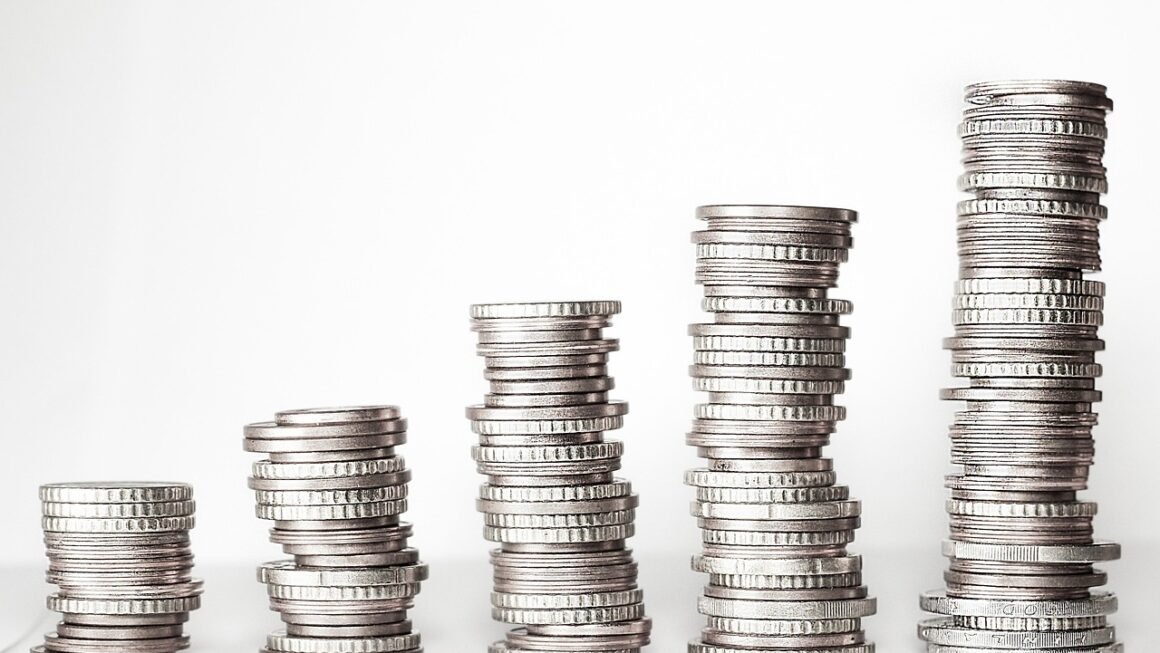
Unlock the power of your money and witness its exponential growth through the magic of compound interest. It’s not just about earning interest; it’s about earning interest on your interest, creating a snowball effect that can dramatically increase your savings and investments over time. Understanding compound interest is crucial for making informed financial decisions and building long-term wealth. This guide will break down everything you need to know, from the fundamental formula to practical strategies for maximizing its benefits.
What is Compound Interest?
Defining Compound Interest
Compound interest is essentially interest earned on both the initial principal and the accumulated interest from previous periods. Unlike simple interest, which is only calculated on the principal amount, compound interest allows your money to grow at an accelerating rate. This “interest on interest” effect is what makes it such a powerful tool for wealth creation.
The Compound Interest Formula
The formula for calculating compound interest is:
A = P (1 + r/n)^(nt)
Where:
- A = the future value of the investment/loan, including interest
- P = the principal investment amount (the initial deposit or loan amount)
- r = the annual interest rate (as a decimal)
- n = the number of times that interest is compounded per year
- t = the number of years the money is invested or borrowed for
Let’s break this down with an example: Suppose you invest $1,000 (P) at an annual interest rate of 5% (r = 0.05), compounded annually (n = 1) for 10 years (t = 10).
A = 1000 (1 + 0.05/1)^(110)
A = 1000 (1.05)^10
A ≈ $1,628.89
After 10 years, your investment would grow to approximately $1,628.89. The $628.89 is the compound interest earned.
Simple Interest vs. Compound Interest
- Simple Interest: Interest is calculated only on the principal amount. A fixed amount of interest is earned each period.
- Compound Interest: Interest is calculated on the principal amount plus accumulated interest. The interest earned increases each period, leading to exponential growth.
Imagine two scenarios with a $1,000 investment at a 5% interest rate for 10 years:
- Simple Interest: You would earn $50 per year, totaling $500 in interest after 10 years (Total: $1,500).
- Compound Interest (annual): As calculated above, you’d earn approximately $628.89 in interest after 10 years (Total: $1,628.89). The difference of $128.89 is the power of compounding.
The Power of Time and Compounding
Early Investment Advantage
The earlier you start investing, the more time your money has to grow through compounding. Even small, consistent investments made early in life can accumulate significantly over several decades. Procrastinating can cost you dearly.
- Example: Investing $100 per month from age 25 versus age 35 at a 7% annual return makes a huge difference. The 25-year-old will have significantly more accumulated at retirement age due to the extra 10 years of compounding.
The Impact of Compounding Frequency
The more frequently interest is compounded (e.g., daily vs. annually), the faster your money grows. While the difference might seem small in the short term, it becomes more significant over longer periods.
- Example: Consider a $1,000 investment at a 5% annual interest rate for 20 years.
Annually compounded: A ≈ $2,653.30
Quarterly compounded: A ≈ $2,685.06
Monthly compounded: A ≈ $2,697.03
* Daily compounded: A ≈ $2,704.81
Although the interest rate is the same, the different compounding frequencies result in different ending values.
Real-World Example: Retirement Savings
Retirement accounts like 401(k)s and IRAs are excellent examples of how compound interest can build wealth over time. Consistent contributions, combined with the power of compounding, can help you achieve your retirement goals. Take advantage of employer matching programs to amplify the compounding effect.
How to Maximize Compound Interest
Increase Your Principal Investment
The larger your initial investment, the greater the potential for growth through compound interest. Try to increase your savings rate gradually over time.
Choose Investments with Higher Returns
While higher returns often come with higher risk, selecting investments that historically outperform the market (while managing risk appropriately) can accelerate the compounding process. Diversify your portfolio to manage risk.
Reinvest Dividends and Earnings
If your investments generate dividends or other earnings, reinvest them to buy more assets. This will increase your principal amount and accelerate compounding. Many brokerage accounts offer automatic dividend reinvestment plans (DRIPs).
Minimize Fees and Taxes
Fees and taxes can eat into your returns and slow down the compounding process. Choose low-cost investment options and take advantage of tax-advantaged accounts like 401(k)s and IRAs. Consider a Roth IRA, where contributions are made after tax, but all growth and withdrawals in retirement are tax-free.
Be Patient and Consistent
Compound interest is a long-term game. Resist the urge to withdraw your money or make impulsive decisions based on short-term market fluctuations. Stay consistent with your investment strategy and let time work its magic.
The Flip Side: Compound Interest on Debt
Understanding Debt Compounding
While compound interest is beneficial for investments, it can be detrimental when it comes to debt. Credit card debt, loans, and other forms of debt often accrue compound interest, making them more expensive over time.
Strategies for Managing Debt
- Pay More Than the Minimum: Paying more than the minimum payment on your debts significantly reduces the amount of interest you pay and shortens the repayment period.
- Prioritize High-Interest Debt: Focus on paying off debts with the highest interest rates first (e.g., credit card debt).
- Consider Debt Consolidation: Consolidating multiple debts into a single loan with a lower interest rate can save you money and simplify your finances.
- Avoid Taking on New Debt: Make a conscious effort to avoid accumulating new debt, especially high-interest debt.
Example: Credit Card Debt
Imagine carrying a $5,000 balance on a credit card with an 18% annual interest rate, compounded monthly. If you only make the minimum payment, it could take you decades to pay off the balance, and you’ll end up paying significantly more in interest than the original principal. Aggressively paying down the balance is crucial.
Conclusion
Compound interest is a powerful force in personal finance. By understanding how it works and implementing strategies to maximize its benefits, you can significantly increase your wealth over time. Remember to start early, be consistent, and manage both your investments and debts wisely. The earlier you harness the power of compounding, the greater your financial rewards will be.