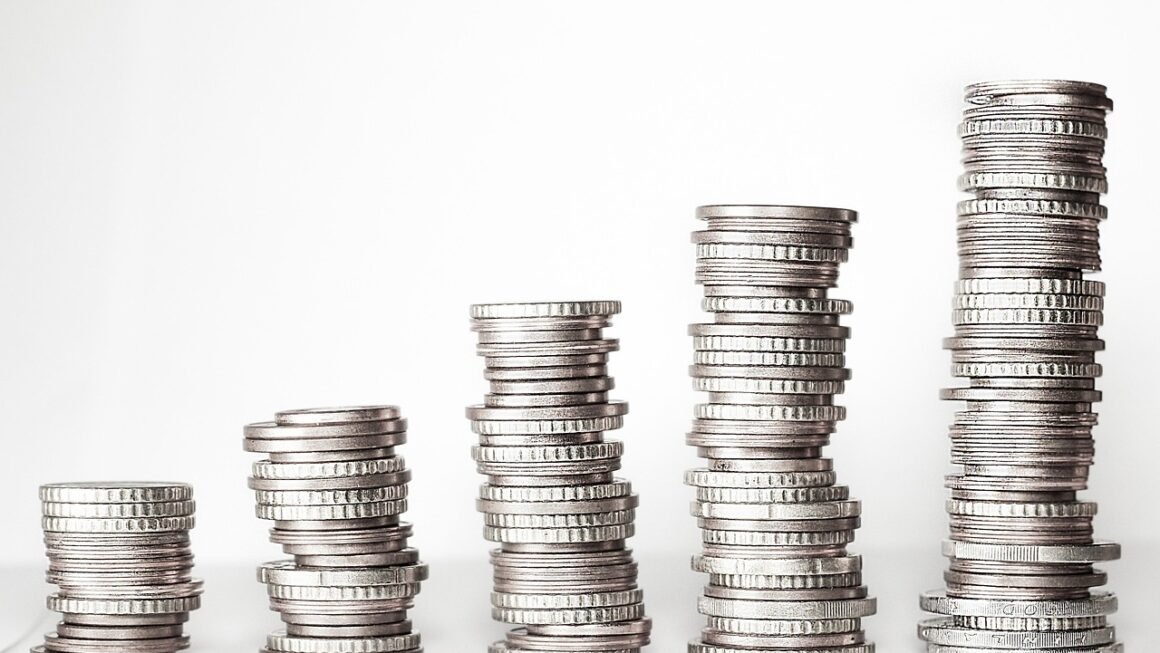
Saving money is a fundamental aspect of financial well-being, but simply stashing cash under a mattress won’t cut it in today’s economy. Inflation erodes the value of your savings over time, making it crucial to find ways to grow your money. That’s where high-yield savings accounts come in, offering a safe and effective way to earn more on your cash reserves. This guide explores the ins and outs of high-yield savings, helping you understand how they work and why they might be the right choice for your financial goals.
What is a High-Yield Savings Account?
Defining High-Yield Savings
A high-yield savings account (HYSA) is a type of savings account that offers a significantly higher interest rate than traditional savings accounts. These accounts are typically offered by online banks and credit unions, as they often have lower overhead costs compared to brick-and-mortar institutions. The higher interest rates allow your money to grow at a faster pace, helping you reach your savings goals more quickly.
How They Differ from Traditional Savings Accounts
The key difference lies in the interest rates. While traditional savings accounts might offer a paltry 0.01% to 0.10% Annual Percentage Yield (APY), high-yield savings accounts frequently offer APYs many times higher, often fluctuating with the Federal Reserve’s benchmark interest rate. This means your money works harder for you in a HYSA.
- Interest Rates: HYSA offer significantly higher interest rates.
- Location: Often found at online banks or credit unions.
- Fees: Can sometimes have specific fee structures or minimum balance requirements, so careful comparison is critical.
- Accessibility: Access to your funds is generally easy through online transfers and sometimes ATMs (though ATM access is less common than with checking accounts).
Understanding APY (Annual Percentage Yield)
APY is crucial for comparing different savings accounts. It represents the actual rate of return you’ll earn in a year, taking into account the effect of compounding interest. For example, if an account has a 5.00% APY, you’ll earn $50 in interest for every $1,000 you keep in the account for a year. The higher the APY, the more you earn.
Benefits of High-Yield Savings Accounts
Higher Interest Rates & Growth
The primary benefit is the ability to earn substantially more interest compared to traditional savings accounts. Over time, this can make a significant difference in the growth of your savings.
Example: Suppose you have $10,000 to save. In a traditional savings account with a 0.05% APY, you’d earn only $5 in interest after a year. With a HYSA at 4.50% APY, you’d earn $450. That’s a difference of $445!
Safety and Security (FDIC Insurance)
High-yield savings accounts offered by banks are typically insured by the Federal Deposit Insurance Corporation (FDIC) up to $250,000 per depositor, per insured bank. This means your money is safe even if the bank fails.
Credit union accounts are typically insured by the National Credit Union Administration (NCUA) with similar coverage limits.
Liquidity and Accessibility
While not designed for daily transactions like a checking account, HYSA accounts offer relatively easy access to your funds. You can typically transfer money electronically to your checking account or other accounts when you need it.
- Easy online transfers.
- Limited (usually 6 per statement cycle) withdrawals per month to comply with federal regulations.
- Debit card access can be available from some banks, though less common than checking.
Helping Achieve Financial Goals
High-yield savings accounts are ideal for saving for specific goals, such as:
- Emergency fund: Having 3-6 months’ worth of living expenses readily available.
- Down payment on a house: Accumulating the necessary funds over time.
- Vacation: Saving up for a dream trip.
- Future investments: Parking money before investing.
How to Choose the Right High-Yield Savings Account
Researching and Comparing Rates
Compare APYs from multiple banks and credit unions. Websites like Bankrate, NerdWallet, and Deposit Accounts provide up-to-date listings of high-yield savings account rates.
Understanding Fees and Minimum Balance Requirements
Pay close attention to any associated fees, such as monthly maintenance fees or fees for exceeding the withdrawal limit. Also, consider any minimum balance requirements. Some accounts require a minimum balance to earn the advertised APY or to avoid fees.
- Maintenance fees: Are there any monthly or annual fees?
- Minimum balance: Is a minimum balance required to earn the advertised APY?
- Transaction limits: How many withdrawals are allowed per month?
- Transfer fees: Are there any fees for transferring money to or from the account?
Evaluating Bank Reputation and Customer Service
Read online reviews and check the bank’s reputation with the Better Business Bureau. Good customer service is essential if you need assistance with your account. Test out their customer service (phone, email, or chat) before committing.
Checking for FDIC or NCUA Insurance
Always verify that the bank is FDIC insured or the credit union is NCUA insured. This protects your deposits up to $250,000 per depositor, per insured institution.
Maximizing Your High-Yield Savings
Automating Savings Contributions
Set up automatic transfers from your checking account to your HYSA. This is an easy way to consistently add to your savings without having to think about it.
Example: Schedule a recurring transfer of $50 or $100 from your checking account to your HYSA every payday. This small, consistent effort can add up significantly over time.
Reinvesting Interest Earned
Allow the interest earned to compound by leaving it in the account. Compounding means you earn interest on your initial deposit plus the accumulated interest, leading to exponential growth over time.
Regularly Reviewing Interest Rates
Keep an eye on the APY of your HYSA and compare it to other options. Interest rates can change, and you may find a better rate elsewhere. Don’t be afraid to switch accounts if necessary.
Consider Tax Implications
Interest earned on savings accounts is generally taxable. You’ll receive a 1099-INT form from your bank at the end of the year reporting the interest earned. Include this income when filing your taxes. Consider consulting a tax professional for personalized advice.
Conclusion
High-yield savings accounts offer a powerful way to grow your money safely and effectively. By understanding how they work, comparing your options, and maximizing your savings strategies, you can take full advantage of these accounts to reach your financial goals. From building an emergency fund to saving for a down payment, a high-yield savings account can be a valuable tool in your financial arsenal. Take the time to research and choose the right account for your needs, and watch your savings grow!